
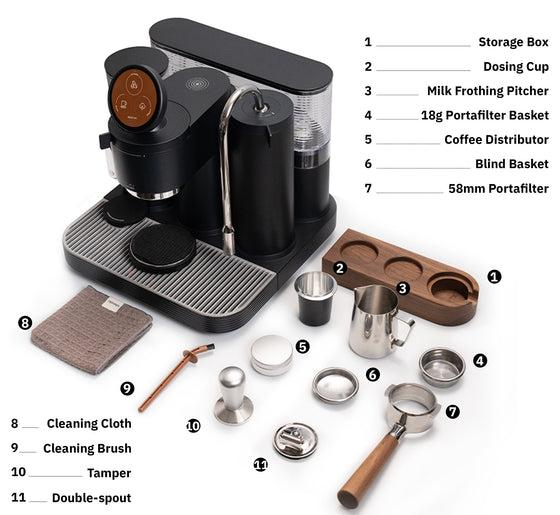
Building a home coffee station does not mean buying every tool available. The best accessories are those that solve a practical problem, improve consistency, or make preparing espresso easier. The Meraki essential accessories guide explores useful tools for home baristas, including tampers, distribution tools, funnels, scales, and milk pitchers. Understanding what each accessory does helps you create a setup that fits your coffee routine without spending money on unnecessary extras.
Start with Your Existing Espresso Equipment
Before purchasing accessories, check what your espresso machine already includes. Some machines require a separate grinder, coffee scale, and additional preparation tools, while integrated systems can reduce the number of separate devices needed on the counter. Buying duplicates can increase costs without making your coffee noticeably better.
Think about the steps that cause the most difficulty in your current routine. Do coffee grounds spill while transferring them into the basket? Is it difficult to prepare an even coffee bed? Do you struggle to reproduce a recipe or clean the equipment after making milk drinks? Identifying a specific problem makes it easier to choose the right tool.
Espresso Scales: Measure Before You Adjust
Consistency begins with measurement. The amount of ground coffee used and the quantity of espresso produced influence extraction and flavour. A digital scale can help you repeat a recipe instead of estimating quantities by eye.
If your machine already measures the coffee dose and espresso yield, a separate scale may be unnecessary for everyday preparation. However, an external scale can still be useful when testing recipes, comparing brewing methods, or weighing coffee for another brewing device.
The important point is to measure consistently. Once you have a reliable starting recipe, adjust one variable at a time. This makes it easier to understand whether a change in grind size, dose, or yield improves the flavour.
Dosing Funnels and Distribution Tools
A dosing funnel sits around the portafilter basket and helps keep freshly ground coffee from spilling over the edges. It is especially useful when grinding directly into the basket or working with a small preparation area. Although it does not improve extraction by itself, it can make the workflow cleaner and more manageable.
Distribution tools address a different challenge. They help spread coffee grounds more evenly before tamping, while a WDT tool uses fine needles to break up clumps and redistribute the grounds. These tools can help when uneven preparation is a recurring issue, but they cannot compensate for an unsuitable grind setting or an inconsistent dose.
You do not necessarily need every distribution accessory. Start with a repeatable preparation technique, then add a tool if it addresses a problem you can identify in your own shots.
Choosing the Right Espresso Tamper
A tamper compresses ground coffee into the portafilter basket before extraction. A suitable fit helps you prepare a level coffee puck without the tamper catching against the basket walls. The correct size and design depend on the equipment you use, so check compatibility rather than assuming that every similarly labelled tamper will fit.
Technique matters as much as the tool itself. Aim for a level, consistent tamp rather than applying excessive force or repeatedly pressing the coffee. An expensive tamper will not automatically improve flavour if the underlying problems are inconsistent grinding, poor distribution, or an unsuitable recipe.
For most home baristas, a well-fitting tamper and a repeatable routine are more useful than owning several different tampers.
Milk Pitchers and Everyday Coffee Preparation
If you regularly make cappuccinos, lattes, or flat whites, a milk pitcher is a practical addition. Its capacity should suit the drinks you normally prepare. A pitcher that is too large can make smaller quantities difficult to control, while one that is too small may leave insufficient room for milk expansion during steaming.
The shape of the spout can also influence pouring and latte-art practice. Beginners should prioritise a comfortable grip, suitable capacity, and easy cleaning before investing in specialist designs.
People who mainly drink espresso without milk may not need a pitcher at all. Choose accessories around the drinks you actually enjoy rather than building a setup based on every possible coffee recipe.
Cleaning Tools Are Essential for Long-Term Care
Cleaning accessories may seem less exciting than brewing tools, but they play an important role in maintaining a coffee station. Coffee oils and loose grounds accumulate around brewing components, while milk residue can remain on steam wands if it is not cleaned promptly.
A group-head brush can help remove loose grounds, and a dedicated cloth makes it easier to wipe down equipment after use. Some machines also require particular cleaning products or backflushing procedures. Follow the manufacturer’s instructions because maintenance requirements differ between models.
Make cleaning part of your normal routine rather than waiting until residue becomes noticeable. Simple, consistent care helps keep equipment in good condition and prevents old coffee residue from interfering with the taste of future drinks.
Which Accessories Should You Buy First?
If you are new to espresso, prioritise tools according to the problems they solve. This first espresso accessories buying guide offers a useful starting point for deciding which tools deserve attention first and which can wait until you develop more experience.
For many setups, a suitable tamper and a reliable way to measure the recipe are sensible priorities. A dosing funnel or distribution tool can come next if preparation is messy or inconsistent. A milk pitcher becomes important when you regularly prepare milk-based drinks, while cleaning tools should match the maintenance routine recommended for your machine.
Avoid purchasing several accessories at once simply because they are popular. Add one tool, learn how to use it properly, and assess whether it solves the original problem. This approach helps control spending and makes improvements easier to recognise.
Build a Setup That Works for You
The most effective home espresso setup is not necessarily the one with the largest collection of accessories. It is the one that makes your daily routine consistent, practical, and enjoyable. A carefully chosen tamper, useful preparation tools, appropriate milk equipment, and the correct cleaning supplies can cover the needs of many home baristas.
Before buying anything, check what your machine already provides and confirm that each accessory is compatible. Focus on the tasks you repeat every day, invest in tools that solve genuine problems, and expand your setup as your skills and preferences develop.