
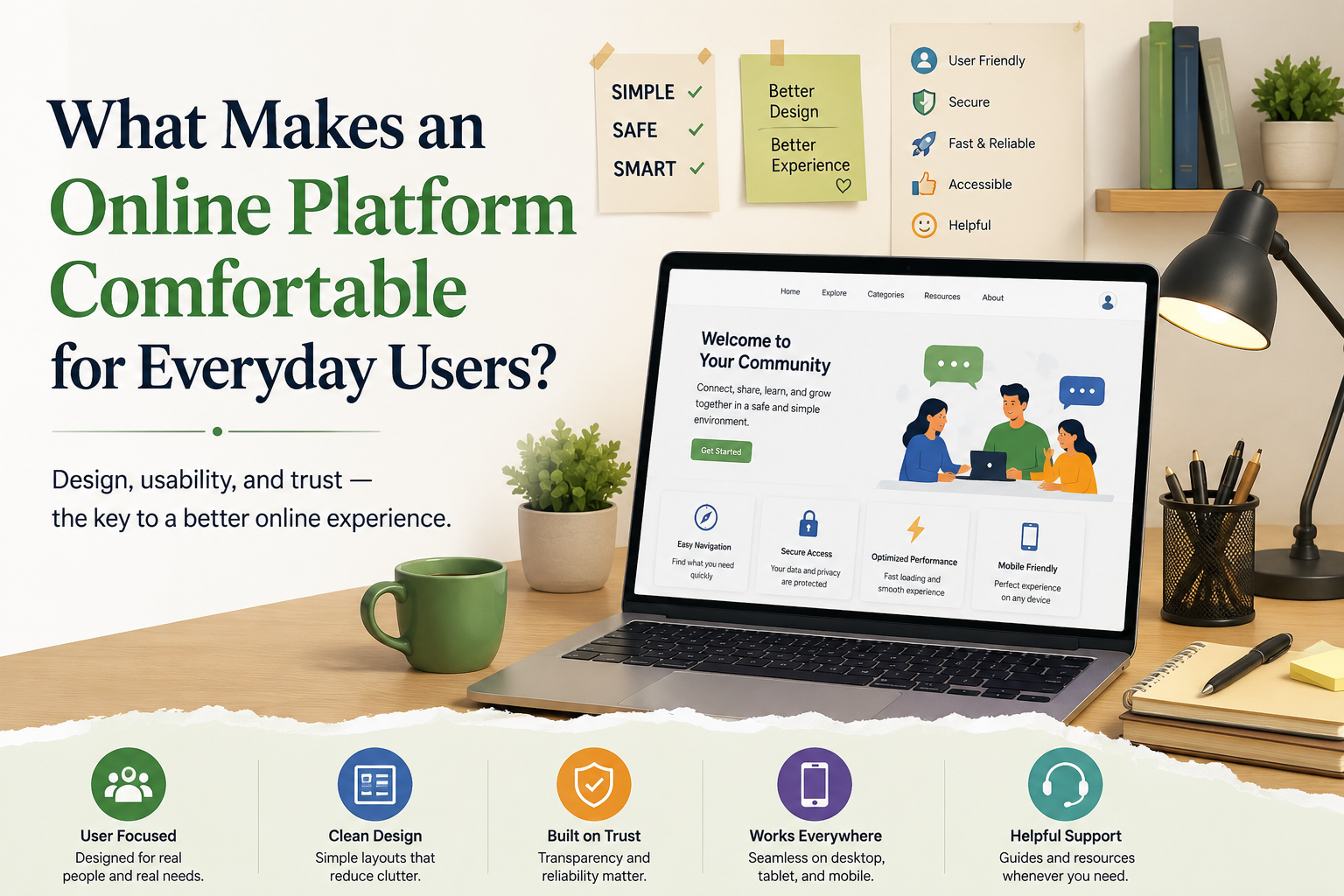
People interact with websites every day for different reasons. Some visit to read information, others participate in communities, manage accounts, explore entertainment, or discover new digital resources. Although these activities are different, users often expect the same basic qualities from the websites they visit.
They want pages that load properly, information that is easy to understand, and features that do not require unnecessary effort.
Creating this kind of experience involves more than attractive colors or modern graphics. It requires attention to usability, organization, accessibility, and trust.
The First Impression Starts With Clarity
A website has only a short amount of time to communicate its purpose.
When visitors arrive at a page, they should be able to understand what the website provides. Clear headings and descriptive navigation can help immediately.
If the purpose of a page is unclear, visitors may leave before exploring further.
This is why websites should avoid unnecessary design elements that compete with the main information.
Users Prefer Predictable Interfaces
Predictability is one of the most valuable qualities of a digital interface.
When buttons behave as expected and menus remain consistent, users feel more comfortable exploring the platform.
Unexpected changes can make even simple tasks confusing. A menu that moves between pages or buttons that change meaning can create unnecessary friction.
Consistent design solves much of this problem.
Registration Should Not Feel Complicated
If a website requires an account, the registration process should be straightforward.
Users should know which information is required and which fields are optional. Forms should provide useful feedback when something is entered incorrectly.
Unnecessary registration requirements can discourage people from continuing.
A good account system asks for the information it genuinely needs and avoids overwhelming new visitors.
Returning Users Need Quick Access
People who visit a platform regularly usually develop routines.
They may visit the same pages, use the same features, or check similar information each time.
Websites should make these repeated actions convenient.
Clear account areas, familiar navigation, and saved preferences can reduce the amount of time required for common tasks.
Readers who want to understand how a dedicated online resource page can be structured may find this useful platform resource helpful as an example.
Mobile Design Cannot Be Ignored
A website can look excellent on a desktop and still perform poorly on mobile.
Small buttons, oversized menus, unreadable text, and slow-loading elements can make mobile browsing frustrating.
Responsive design allows the same website to adapt to different screens.
However, responsiveness should go beyond simply shrinking desktop content. Mobile users need layouts designed around touch interaction and smaller displays.
Performance Is Part of User Experience
Users notice slow websites quickly.
Even when the content is valuable, long loading times can create a negative impression.
Website owners can improve performance by optimizing images, reducing unnecessary scripts, using efficient hosting, and removing features that do not contribute to the site’s purpose.
A fast page feels easier to use.
Helpful Error Messages Matter
Errors are unavoidable. What matters is how a website handles them.
A message such as “Something went wrong” gives users very little information.
A better message might explain what happened and suggest what the visitor should do next.
For example, if an account action fails because a required field is missing, the website should clearly identify the missing information.
Small details like this can make a major difference.
Accessibility Benefits Everyone
Accessibility is often discussed in relation to users with disabilities, but accessible design can improve usability for everyone.
Readable text, sufficient contrast, descriptive labels, keyboard-friendly navigation, and logical page structures help visitors with different needs and devices.
Accessibility should be considered during the design process instead of being treated as an afterthought.
Security Builds Confidence
A comfortable website experience also depends on trust.
Users are less likely to interact with a platform when they are uncertain about how their information is handled.
Websites that involve accounts should use secure connections and encourage responsible password practices.
Users should avoid sharing passwords with others and should be cautious when accessing account pages through unfamiliar links.
Security is a shared responsibility between platforms and their visitors.
Privacy Should Be Easy to Understand
Privacy policies can sometimes be difficult to read, but the underlying information should still be accessible.
Visitors should be able to understand what types of data are collected and how that information may be used.
Clear privacy explanations help users make informed decisions.
A website does not need to hide important information behind complicated language.
Good Content Supports Good Design
Even the best interface cannot compensate for poor content.
Articles and guides should be organized around the questions visitors actually have.
Headings should describe what each section contains. Paragraphs should remain focused rather than combining several unrelated ideas.
This allows readers to scan a page and quickly locate useful information.
Search and Categories Work Together
Websites with large amounts of content should provide more than one way to find information.
Categories help users browse broadly, while search helps them locate specific subjects.
The two systems work best when they complement each other.
A visitor who wants to explore can browse categories, while someone who already knows what they need can use search.
Websites Should Avoid Unnecessary Pop-Ups
Pop-ups can sometimes be useful, but excessive interruptions can make browsing uncomfortable.
If visitors repeatedly encounter full-screen messages, advertisements, notifications, or subscription requests, they may stop exploring.
Important messages should be presented at appropriate times rather than interrupting every action.
Trust Develops Over Time
A website cannot create long-term trust through design alone.
Reliable information, transparent policies, consistent performance, and responsible handling of user information all contribute to credibility.
Regular visitors notice when a platform improves its content and fixes recurring problems.
Trust is built through repeated positive experiences.
Useful Platforms Respect User Time
One of the clearest signs of good design is efficiency.
Visitors should not have to click through multiple unrelated pages to complete a simple action.
Menus should be organized logically, important information should be visible, and unnecessary steps should be reduced.
This principle applies to nearly every type of online platform.
Technology Continues to Change
Websites need to evolve as user expectations change.
Mobile browsing, accessibility standards, security requirements, and interface conventions continue to develop.
A platform that worked well several years ago may require updates today.
Regular improvements can help maintain usability without completely redesigning the website every time technology changes.
A Balanced Approach Works Best
There is no single perfect website design.
Different audiences have different expectations. A discussion community may need different tools from an educational website or an entertainment platform.
The important thing is to understand the audience and build around its needs.
Adding features simply because they are available can make a platform more complicated. Features should have a clear purpose.
Final Thoughts
A comfortable online experience is created through many small decisions.
Clear navigation, responsive design, useful content, reasonable security, accessible interfaces, and good performance all contribute to how visitors perceive a website.
When these elements work together, users can focus on what they came to do rather than figuring out how the platform works.
For anyone interested in additional health, technology, lifestyle, and online-resource content, PureHealthNest offers a range of articles covering different subjects.
The strongest websites are ultimately those that make digital tasks feel simple, predictable, and trustworthy.
 owais
owais